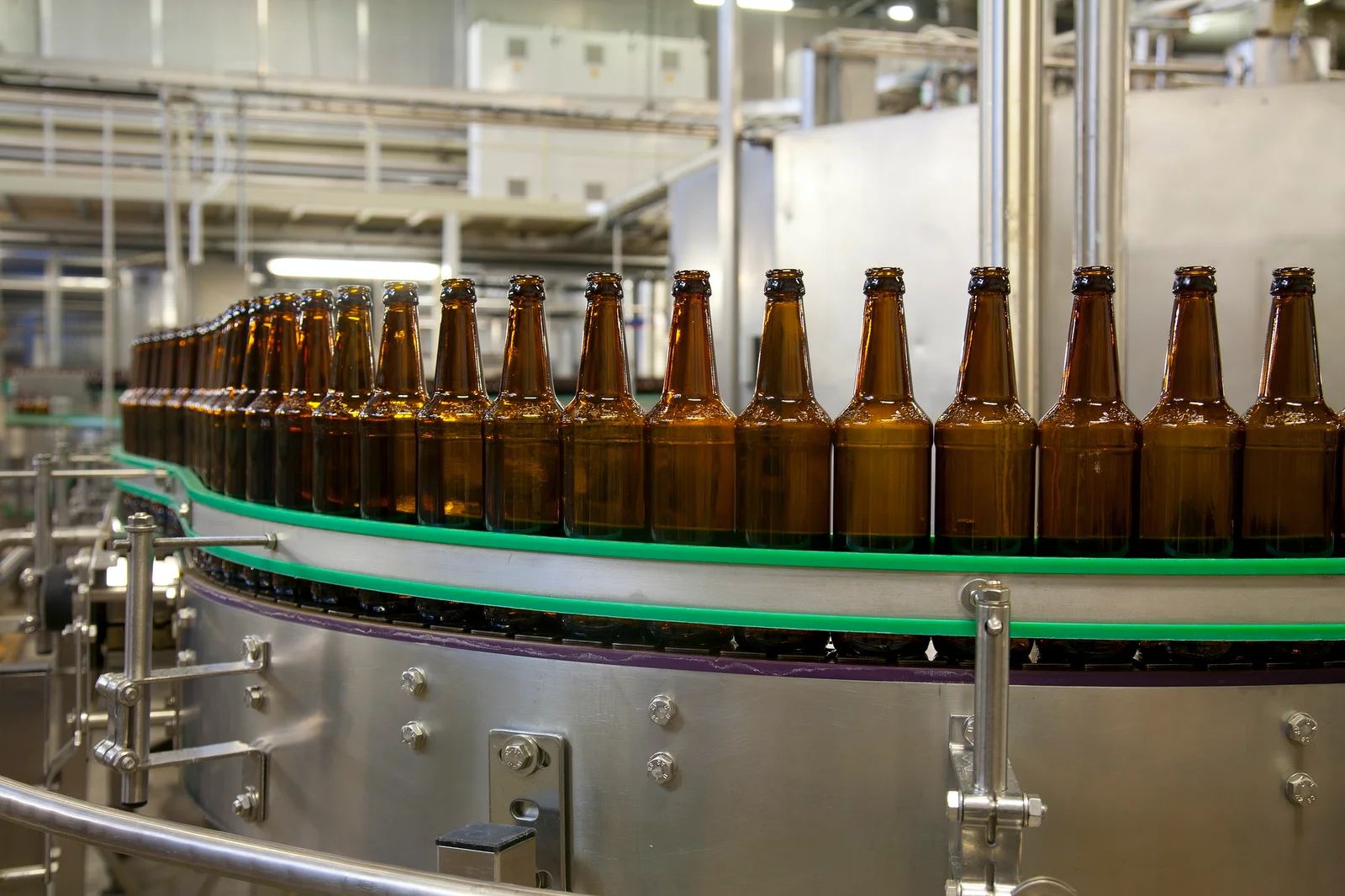
Craft beer equipment helps a new brewery control batch size, fermentation temperature, cleaning time, packaging speed, and the amount of beer that can be produced from the same floor area. A 10 BBL brewhouse produces about 310 U.S. gallons, or 1,174 liters, before process losses. With two brews per day and 200 brewing days, theoretical annual hot-side output reaches 4,000 BBL, but fermenter space, beer residence time, packaging capacity, and cleaning schedules usually lower practical output. Equipment works best when brewhouse, cellar, cooling, utilities, and packaging capacity are sized as one production system rather than purchased separately.
The commercial setting makes equipment sizing more important than it was a decade ago. The Brewers Association reported 9,578 operating U.S. craft breweries in 2025, down 2.9% from 2024, while craft volume fell 4% to about 22.0 million barrels. Craft beer still represented 13.4% of U.S. beer volume and $28.0 billion in retail sales. A new brewery therefore enters a large but crowded market where unnecessary tank space, slow packaging, excessive labor, or inconsistent batches can affect operating costs from the first production month.
The starting point is usually expected sales volume rather than the largest brewhouse that fits the building. One U.S. beer barrel equals 31 gallons, so a 5 BBL system holds about 155 gallons per batch, a 10 BBL system about 310 gallons, and a 20 BBL system about 620 gallons. A taproom selling mostly draft beer may use smaller batches to keep more styles available, while a brewery supplying packaged beer to retailers may prefer fewer, larger production runs. The Brewers Association classifies a microbrewery as producing under 15,000 barrels annually and selling 75% or more off-site, while a brewpub sells at least 25% of its beer on-site.
| Example production setup | Nominal volume | Approx. liquid volume | Typical planning question |
|---|---|---|---|
| 5 BBL brewhouse | 5 barrels | 155 gal / 587 L | Is small-batch variety more important than daily output? |
| 10 BBL brewhouse | 10 barrels | 310 gal / 1,174 L | Can the cellar receive one or two brews per day? |
| 20 BBL brewhouse | 20 barrels | 620 gal / 2,347 L | Can cooling, utilities and packaging support the larger batches? |
A brewhouse cannot maintain that output unless enough fermentation space is available. Assume a 10 BBL brewery makes five batches each week. Nominal wort production is 50 BBL per week, but beer remaining in a fermenter for 14 days requires roughly 100 BBL of fermentation capacity before allowing time for cleaning, dry hopping, cold conditioning, or schedule changes. Beer held for 21 days raises the requirement toward 150 BBL. A brewery making both fast-turn ales and longer-conditioned lagers has to calculate cellar occupancy by beer style rather than simply counting tanks.
A 10 BBL brewhouse paired with six 10 BBL fermenters does not automatically provide 60 BBL of weekly finished beer. Tank residence time sets how quickly the same 60 BBL of stainless-steel capacity can be reused.
Tank geometry and working volume also need attention. A vessel sold by nominal volume needs adequate headspace during active fermentation, especially for strains or recipes that create substantial foam. Tank specifications should distinguish total volume from usable working volume, pressure rating, jacket coverage, port arrangement, dry-hop access, spray devices, and allowable cleaning conditions. Buying a fermenter only by its advertised barrel rating can leave operators with less usable beer volume than their sales model assumed.
Temperature control then sets another practical limit. Fermentation produces heat, and several tanks may require cooling at the same time. Jacketed fermenters connected to a glycol system allow individual temperature control, while cold crashing can create a much larger short-term refrigeration demand than simply holding fermented beer at a stable temperature. A brewery adding 50% more fermentation capacity without checking chiller capacity, pump flow, glycol distribution, and available electrical service can install tanks that cannot all be cooled according to schedule.
The same planning applies on the hot side. A two-vessel brewhouse combines more process steps into fewer vessels and can suit a brewery running one or two turns per day. Three- or four-vessel layouts separate operations such as mashing, lautering, boiling, and whirlpooling, allowing portions of consecutive batches to overlap. If a brewery reduces one brew cycle from 7 hours to 5.5 hours, 200 production days represent roughly 300 hours of additional available brewhouse time. The financial usefulness of that time depends on actual demand, staffing, cellar space, and packaging capacity rather than vessel count alone.
Heating choice also affects the building. Electric systems can work well at smaller capacities when sufficient electrical service is available. Direct-fire equipment requires suitable combustion equipment and ventilation. Steam-heated systems add a boiler or steam generator, piping, condensate handling, water treatment, and local inspection requirements. A 2025 brewery project should therefore compare installed utility requirements with equipment purchase price; a lower tank quotation can still produce a more expensive installation when electrical upgrades, steam equipment, ventilation, or structural changes are added.
Cleaning design deserves the same level of calculation because every hour spent cleaning is an hour the vessel cannot hold another batch. Spray balls or rotary cleaning devices, sanitary pumps, properly arranged valves, smooth internal surfaces, suitable drain points, and clean-in-place procedures reduce repetitive manual work. If cleaning and preparation take 90 minutes per fermenter and a better layout reduces the cycle by 30 minutes across 250 tank cleanings per year, the brewery recovers about 125 labor hours annually before counting reduced hose handling and production interruptions.
Material specification matters here as well. Commercial brewery vessels are commonly fabricated from stainless steel because suitable grades tolerate repeated cleaning and beverage contact when fabricated and maintained correctly. Buyers should inspect weld finishing, internal surface condition, valve quality, gasket materials, pressure documentation, jacket construction, insulation, and accessibility instead of treating “stainless steel” as a complete specification. A poorly positioned fitting can add manual cleaning work hundreds of times over a 10-year tank life.
The transfer from brewhouse to fermenter introduces another capacity question: cooling hot wort quickly enough for the next stage. Plate heat exchangers use cold water, chilled water, or another configured cooling loop to reduce wort temperature before yeast pitching. A heat exchanger selected for a 10 BBL system should be evaluated using incoming water temperature, desired knockout temperature, flow rate, and seasonal conditions. A brewery that expands from one to two daily batches increases both wort-cooling demand and the volume of hot water that may be recovered for later cleaning or brewing use.
Packaging then becomes the next equipment limit. A brewery producing 30 BBL of finished beer per week has about 930 gallons to package. If one packaging setup effectively processes 5 gallons per minute, theoretical filling time alone approaches 186 minutes before startup, sanitation, changeovers, labeling, quality checks, product loss, and cleanup. Doubling cellar volume without changing a slow packaging process can leave finished beer occupying tanks while operators are still preparing the previous batch for sale.
Oxygen control becomes more important once beer leaves fermentation. Pumps, hoses, bright beer tanks, kegging systems, and canning or bottling equipment should allow operators to limit unnecessary air contact during transfer and filling. Hop-forward beers can show flavor changes particularly quickly when package oxygen is poorly controlled, so equipment selection should include purging procedures, filling method, pressure control, and practical access to quality measurements rather than only containers per minute.
For a startup comparing equipment packages, the purchase list often grows beyond the brewhouse:
-
malt mill and grain-handling equipment;
-
mash/lauter and kettle/whirlpool vessels;
-
hot- and cold-liquor storage;
-
sanitary pumps and heat exchanger;
-
fermentation and conditioning tanks;
-
glycol chiller, pumps, headers, and insulated piping;
-
cleaning equipment and chemical-handling provisions;
-
air and CO₂ distribution where required;
-
keg, can, or bottle packaging equipment;
-
controls, instrumentation, platforms, hoses, fittings, and spare parts.
The relationship between these items is often more useful than adding another large vessel. A project using a Brewery/Distillery/Winery All-In-One Solution approach can plan tanks, process equipment, refrigeration, piping, controls, and packaging around the same expected throughput instead of specifying each component independently. For example, installing 120 BBL of cellar capacity is of limited use when the chiller was selected for 60 BBL, the packaging area handles only 20 BBL per working day, or the building has insufficient drainage for the planned cleaning schedule.
Floor layout should be checked before fabrication because stainless-steel volume is only useful when people can operate around it. Tank diameter, overall height, doorway dimensions, ceiling clearance, platform access, drain locations, hose routes, electrical panels, glycol headers, ventilation, and packaging traffic all affect usable space. Leaving room for two future fermenters during a 2026 installation can cost little at the layout stage compared with moving fixed utilities later.
Expansion calculations can also use larger fermenters without replacing the first brewhouse. A 10 BBL brewhouse may feed a 20 BBL fermenter through two brews, provided the process, yeast-pitching plan, filling interval, and tank specification support the practice. Moving from six 10 BBL fermenters to a cellar containing several 20 BBL vessels can raise fermentation capacity while keeping the original hot-side equipment in service. The practical limit appears when daily brewing hours, cooling demand, staffing, or packaging can no longer support the additional turns.
Equipment should finally be compared through installed production cost rather than tank price alone. Freight, rigging, electrical installation, refrigeration, water treatment, drainage, piping, gas or steam work, ventilation, commissioning, packaging equipment, spare parts, and building modifications can materially change the project budget. Local fire, building, wastewater, food-production, pressure-vessel, and alcohol-production requirements also need to be checked before equipment is ordered because requirements differ by jurisdiction.
The market data gives a useful reason to keep that calculation conservative. In 2025, 60% of U.S. craft breweries reported lower production, while 39% reported growth and 1% were approximately flat; total craft output declined 4%. Equipment capacity should therefore follow a documented sales plan rather than an assumption that every new brewery will quickly need larger tanks. A system that can add fermenters, packaging capacity, and utility connections in stages allows production spending to follow actual beer volume while keeping the original brewhouse useful for a longer part of the brewery’s operating life.