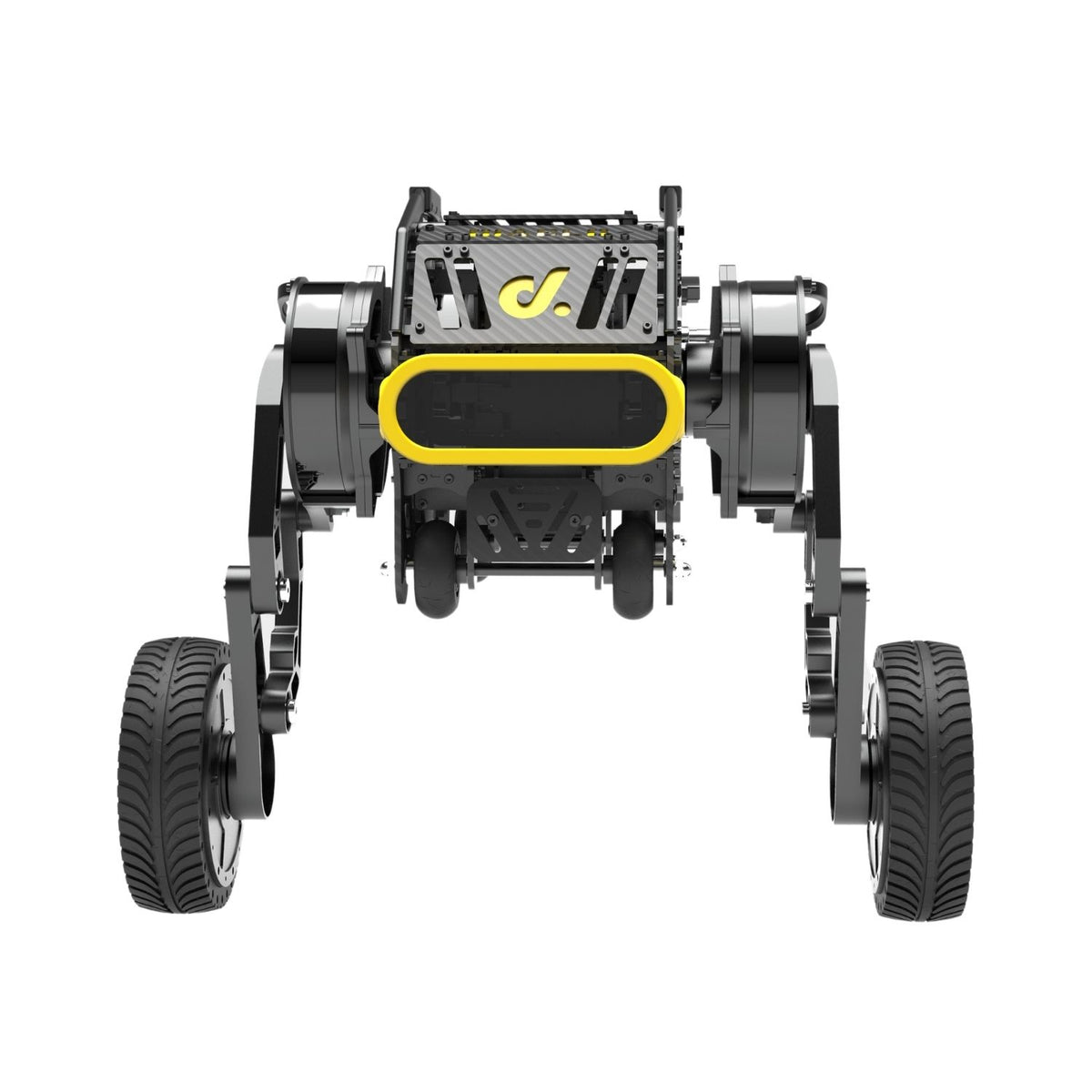
Choosing between D1, TITA and Diablo robot platforms depends on how the robot will be used rather than the highest specification on paper. Mobile robotics projects often run for 6–24 months, and replacing hardware midway can increase development costs by more than 30%. D1, TITA and Diablo each support different payload ranges, mobility styles and software environments. Selecting the right platform at the beginning usually shortens integration time, reduces repeated testing and improves long-term stability for robotics research, education and product development.
Many robotics teams compare hardware specifications first, yet long-term testing usually reveals that software support, expansion capability and maintenance effort affect daily work just as much. Universities, robotics startups and industrial laboratories often keep a platform in service for three to five years, making reliability and upgrade flexibility more important than short-term benchmark numbers.
When comparing mobile robots, three areas usually receive the most attention.
| Platform | Typical Strength | Typical Application |
|---|---|---|
| D1 | Larger payload capacity and modular expansion | Industrial research, autonomous logistics |
| TITA | Compact size and agile movement | Indoor navigation, education, algorithm testing |
| Diablo | High-speed balancing mobility | Dynamic locomotion, AI mobility research |
The comparison starts with mobility because every later function depends on how the robot moves through its environment. A platform that performs well on smooth laboratory floors may behave differently on ramps, carpets or outdoor pavement.
D1 is generally selected when developers need additional onboard computing, larger batteries or multiple sensors. Projects using LiDAR, stereo cameras, robotic arms and edge AI computers often require extra mounting space. During long mapping sessions lasting four to eight hours, available power and structural stability become more noticeable than peak speed.
Payload capacity also affects future expansion. A robot carrying only a camera today may later require an industrial computer, GPS receiver, wireless communication modules and additional perception sensors. An extra 5–10 kg of payload margin can prevent hardware redesign during later project stages.
TITA follows a different direction. Instead of supporting heavier equipment, it emphasizes portability and fast deployment. A smaller footprint allows operation inside offices, classrooms, laboratories and narrow indoor corridors where turning radius becomes more important than maximum load capacity.
Developers working on SLAM, indoor navigation and reinforcement learning frequently perform hundreds of navigation cycles before changing hardware. In several academic studies published after 2022, indoor navigation datasets commonly exceeded 5,000 trajectory samples, making repeatability more useful than occasional high-speed movement.
Diablo attracts attention because of its balancing design. Unlike traditional four-wheel differential robots, balancing platforms introduce additional control challenges while allowing faster acceleration and more responsive movement. Developers interested in model predictive control, reinforcement learning or balance control often choose this type of robot because it generates richer motion data during testing.
Higher agility also increases software requirements. Maintaining balance while avoiding obstacles requires continuous sensor updates, lower control latency and more frequent state estimation compared with conventional wheeled robots. Many balancing robots therefore operate with control frequencies above 200 Hz while perception systems continue processing camera and LiDAR data simultaneously.
Hardware specifications alone do not determine development speed. Software compatibility often changes the amount of engineering work required during the first several months.
ROS and ROS 2 remain the most widely adopted robotics middleware environments. According to the 2024 ROS community statistics, thousands of open-source packages support localization, perception, planning and manipulation. A platform with mature ROS integration usually reduces software adaptation work compared with building every hardware interface from scratch.
Sensor expansion deserves similar attention. Modern autonomous robots rarely rely on a single sensor. A development platform may simultaneously carry 3D LiDAR, RGB cameras, depth cameras, IMUs, GNSS receivers and force sensors. Standard communication interfaces such as Ethernet, USB 3.0, CAN and UART simplify future upgrades without replacing the robot chassis.
Maintenance becomes more noticeable after six months of regular use. Wheels, batteries, suspension components and connectors experience gradual wear during continuous operation. Platforms with modular mechanical structures allow faster replacement of damaged parts, reducing downtime during research schedules or product validation.
Developers should also estimate computing requirements before selecting hardware. Running basic navigation may require only moderate processing power, while real-time object detection, visual-language models and autonomous manipulation can consume significantly more GPU resources. Leaving room for future computing upgrades usually extends the usable life of a robot platform.
Many laboratories evaluating robotics research platforms also compare documentation quality. A platform with detailed SDK documentation, example projects and active developer communities often shortens onboarding time for new students and engineers. Documentation quality may save dozens of development hours during the first integration phase.
Additional platform information is available through <a href="https://shop.directdrive.com/collections/robots/">robotics research platforms</a>, where different mobile robot configurations and expansion options can be reviewed before selecting hardware for a specific application.
Rather than searching for a universally better platform, most engineering teams compare expected payload, operating environment, software compatibility, maintenance effort and future expansion together. D1 generally fits larger autonomous systems, TITA supports compact indoor development, while Diablo provides a suitable starting point for projects involving balancing control, agile mobility and advanced motion algorithms.