Brewing Kit From 200 Litres to 10,000 Litres
Hermann Biological Engineering publishes brewery sizes as a ladder rather than a catalogue: 200 L nano kit, 300 L and 500 L microbrewery sets, 1,000 L and 2,000 L brewhouses in two, three or four vessels, then 3,000 L, 5,000 L and a 10,000 L (10 T) system at the top. Each rung roughly doubles the wort you can make in one brew day, so the real question is not which size is largest but which step your lease, your tank farm and your sales route can absorb in the first three years.
Key takeaways
- The published range starts at a 200 litre nano set and ends at a 10,000 litre (10 T) brewhouse.
- Vessel count rises with size: 500 L is offered as a 3-vessel set, 1,000 L in 2, 3 or 4 vessels.
- 1 BBL is about 117 litres, so a 1,000 litre kit is roughly an 8.5 BBL brewhouse.
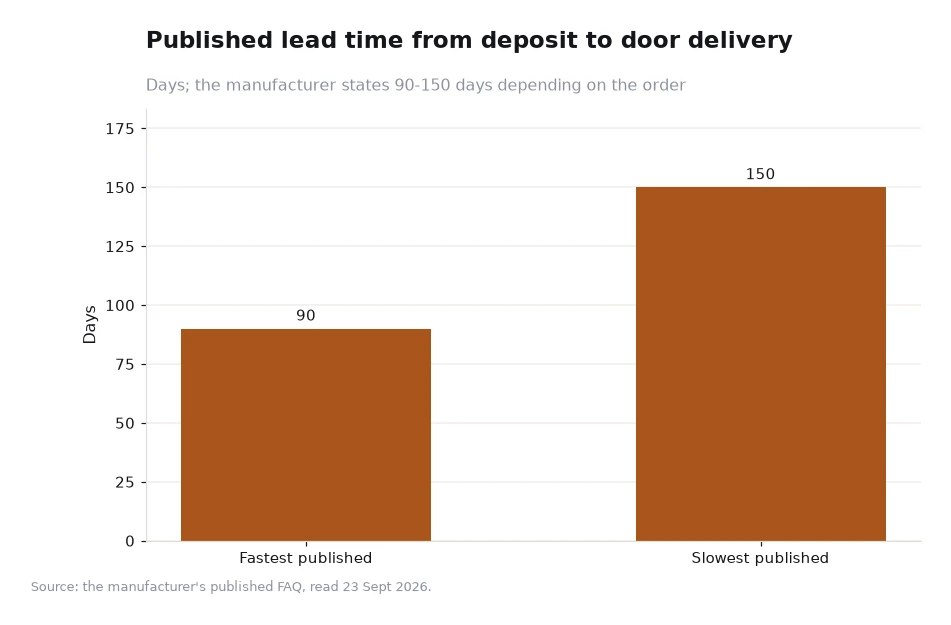
- Published lead time is 90–150 days from deposit to door delivery, depending on the order.
The published ladder, rung by rung
At the bottom sits the 200 litre nano brewery, a set small enough for a taproom corner and honest enough to brew the same recipe every week. Next come the 300 litre and 500 litre microbrewery sets, with the 500 litre also listed as a 3-vessel brewhouse for brewers who want a separate mash, lauter and kettle step. From there the ladder widens: 1,000 litre systems in two, three or four vessels, a 2,000 litre unit offered as a 2-vessel copper set or a 3-vessel set, a 2,500 litre 4-vessel system, then 3,000 litre, 5,000 litre and finally the 10,000 litre plant that a regional contract brewery would recognise as its main kettle.
The published Brewing Equipment list is organised by volume rather than by beer style, which is a useful hint about how the factory thinks. Style questions are answered by the recipe and the fermentation profile; the vessel size answers how many hectolitres leave the cold room each month.
Above the 2,000 litre step the ladder is about process control rather than recipe ambition. A 2,500 litre 4-vessel system and a 3,000 litre kit normally arrive with a wider mash and lauter vessel, a dedicated whirlpool and more instrumentation, because at that size one lost transfer costs more beer than the extra vessel costs in stainless steel. The 5,000 litre and 10,000 litre systems are bought by breweries that already sell everything they brew and need fewer, larger brew days to hold the same monthly output.
What one brew day produces at each step
Using 1 BBL ≈ 117 litres as the conversion, a 500 litre kit is about 4.3 BBL, a 1,000 litre kit about 8.5 BBL, a 2,000 litre brewhouse about 17 BBL and a 5,000 litre system roughly 43 BBL. Those figures describe one full kettle, not one month of sales. A brewery selling 30 hectolitres a month is moving 3,000 litres, which a single 1,000 litre kit can cover in three brew days spread across the month.
This is where a ladder beats a single price list. Two vessels of the same total volume behave differently: a 1,000 litre kit brewed twice a week produces more than a 2,000 litre kit brewed twice a month, because freshness, tank turns and labour all follow the brew calendar rather than the vessel stamp.
Vessel count: what the extra vessel buys
A 2-vessel brewhouse combines mash and lauter in one tun and kettle and whirlpool in the second. A 3-vessel set separates one of those pairs, and a 4-vessel set separates both, which shortens the gap between brews on the same day. The manufacturer lists all three arrangements inside the same size classes, so the choice is a production decision rather than a hidden upgrade.
For a brewpub running one or two brews a day, the 2-vessel arrangement is usually enough and leaves floor space for tanks. For a production brewery planning back-to-back brews to fill 20 hectolitre fermenters, the 3-vessel or 4-vessel set earns its footprint on the first double brew day.
Vessel count also shapes the cleaning routine, because every extra vessel adds a CIP step to the brew day. A brewery with one trained brewer often does better with a 2-vessel set and a second fermenter than with a 4-vessel kit and an empty cellar beside it.
Choosing a rung you can grow into
The practical test is whether the next size up fits the building. A 1,000 litre kit with four matching fermenters and a bright tank needs a service area that a 200 litre nano set will not fill, while a 5,000 litre brewhouse will not fit through a standard taproom door. Hermann publishes customised design proposals, so the layout can be drawn around the room you actually have before the order is placed, and the company has been doing that work for 23 years, as the company profile sets out.
Also check the utilities before choosing the top rung. Steam, direct fire and electric heating all exist in this market, and the choice changes the boiler, the flue and the incoming supply. A 10,000 litre system on a shared industrial estate is a different permit conversation from the same kettle in a farm building. The brewing vessels pages split the brewhouse by vessel count, and the contact page is where a floor plan turns into a proposal.
The ladder in one table
| Published size | Approx. BBL per brew | Vessel arrangements listed |
|---|---|---|
| 200 L nano | About 1.7 BBL | Compact nano set |
| 500 L | About 4.3 BBL | Microbrewery set, or 3-vessel brewhouse |
| 1,000 L | About 8.5 BBL | 2, 3 or 4-vessel |
| 2,000 L | About 17 BBL | 2-vessel copper or 3-vessel |
| 10,000 L (10 T) | About 85 BBL | Large multi-vessel system |
Worked example: barrels from a 1,000 litre kit
Assume a 1,000 litre brewhouse brewing twice a week, so eight brews a month, with 8% lost to trub, transfers and tank bottoms. One brew gives 1,000 × 0.92 = 920 litres of saleable beer. Eight brews give 920 × 8 = 7,360 litres a month, which is 7,360 ÷ 117 = 62.9 BBL a month, or about 755 BBL a year. If the brewery instead brews once a week on the same kit, the same arithmetic halves to 31.5 BBL a month.
That is the whole decision in two numbers: the kit sets the ceiling for one brew, and the calendar sets how close you come to it. A brewery at 62.9 BBL a month on a 1,000 litre kit is running its vessels hard; the step to 2,000 litres buys room to breathe, not just bigger tanks. Every figure here is an example with the assumptions written next to it.
Frequently asked questions
How large is the smallest published kit?
The smallest set on the published product list is a 200 litre nano brewery, which is about 1.7 BBL per brew at 1 BBL ≈ 117 litres. The 300 litre and 500 litre microbrewery sets are the next steps up on the same list.
How long does delivery take after ordering?
The published lead time is 90–150 days from deposit to door delivery, depending on the order. Custom vessel counts, heating choice and the delivery address all sit inside that range rather than outside it.
Picking your rung without regret
Decide the monthly volume you need to sell first, convert it to BBL, then work backwards to the brew calendar and only then to the vessel size. Write the brewing frequency into the same note, because it changes the answer more than the size class does.
Take the resulting two numbers into the design conversation, along with a floor plan, an incoming power or gas figure and a realistic three-year sales curve. A kit that matches those four inputs is worth more than a larger one the building cannot feed.
The sizes, vessel arrangements and lead time above are taken from the manufacturer's own website, read 23 Sept 2026, and the barrel and capacity arithmetic is our own example with its assumptions shown in the text.[1] Compare the current published list and quotation before fixing the size in a contract.